

By: Gwen Pierce
For Alano Miller and Elijah Jones, playing Lincoln and Booth in “Topdog/Underdog” has blurred the line between the brotherhood they portray and the one they’re building.
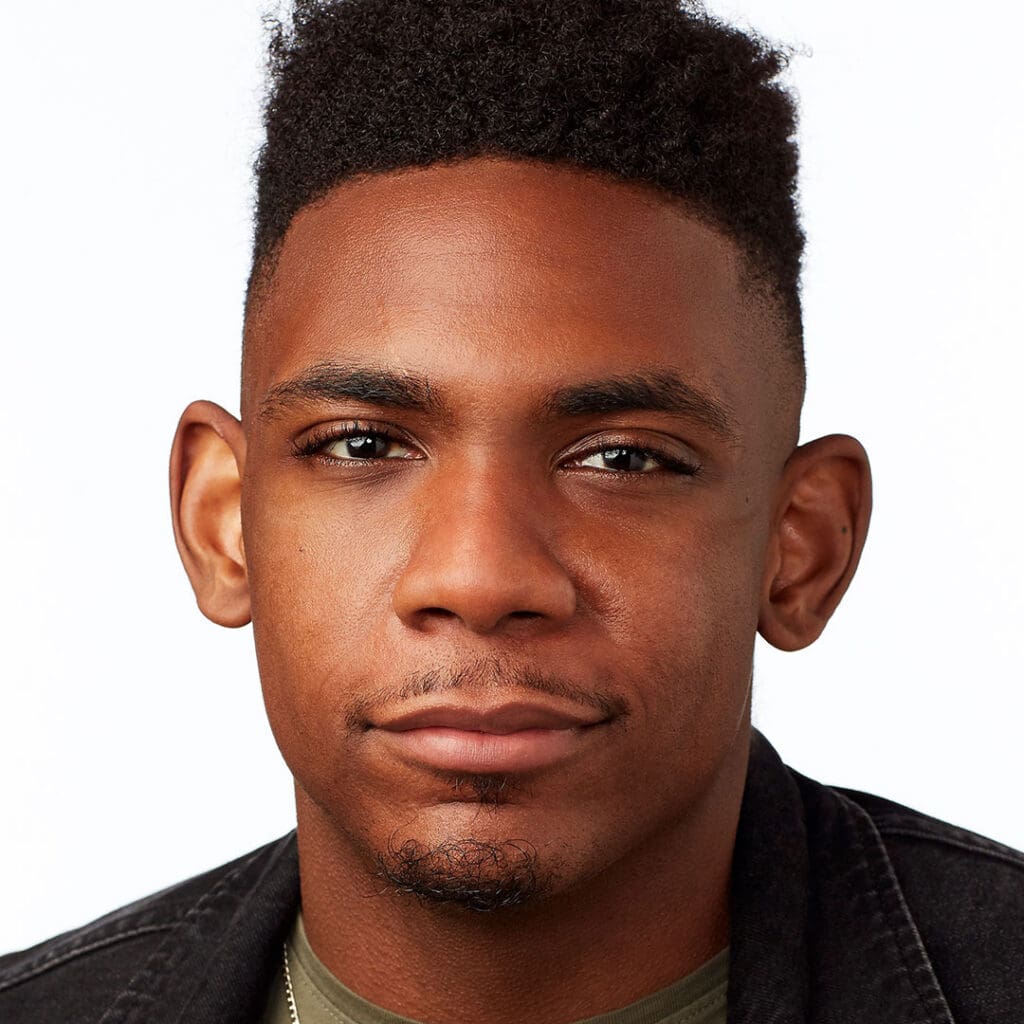
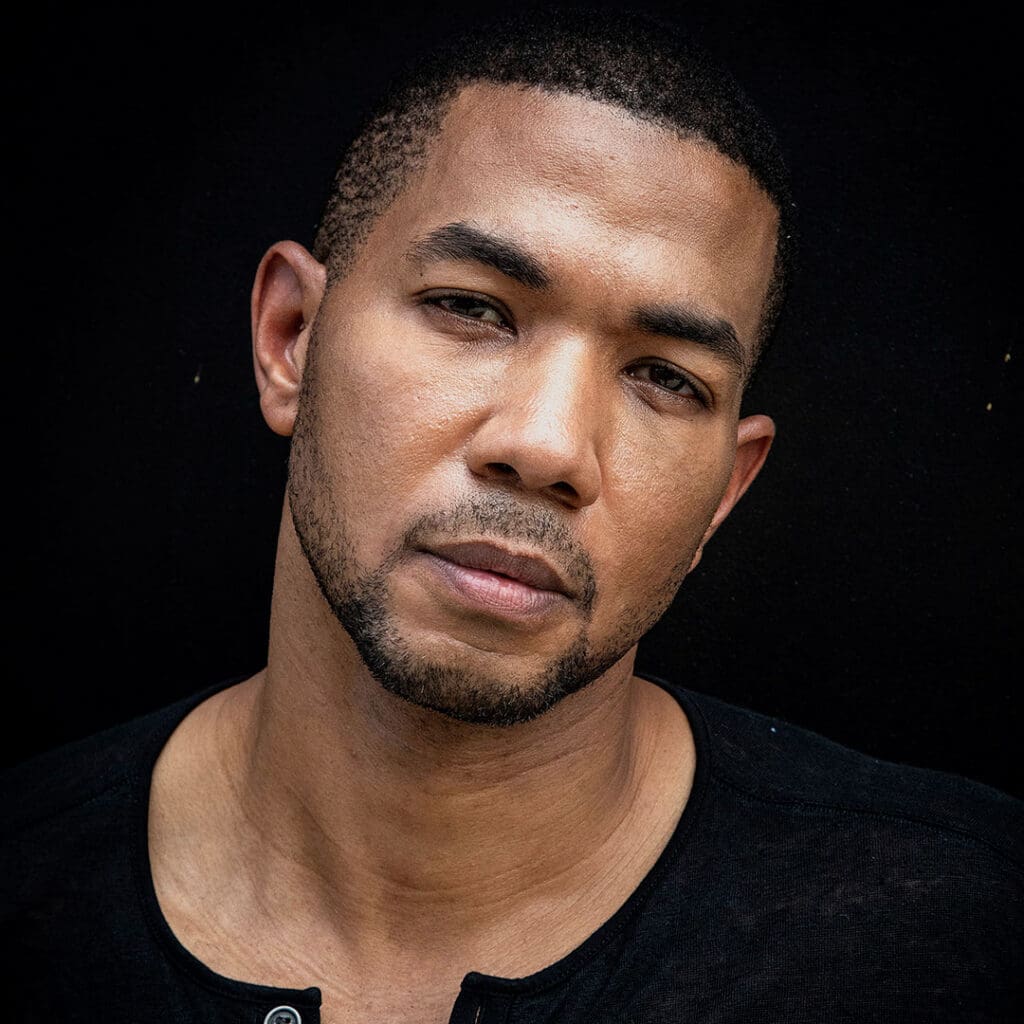
Fifteen minutes. That’s all we get with Alano Miller and Elijah Jones before Topdog/Underdog opens next week at The Old Globe — hardly enough time to talk about a play that took Suzan-Lori Parks years to write and these two actors three weeks to unmake and remake. But fifteen minutes turns out to be enough, because neither of them wastes a word.
The play, famously, is about two brothers — Lincoln and Booth — locked in a lifetime of love disguised as competition, competition disguised as love. Ask Alano Miller if director Steve H. Broadnax III’s framing of the show as a “love story” changed how he approached it, and he doesn’t hesitate.
“I don’t think we ever walked into it feeling like we weren’t — there was love. It was finding the balance. How we show our love, even though it is very toxic.”
It’s a line that could describe the play. It could also, it turns out, describe the two actors facing me on a Zoom call. Miller (Underground, Cherish The Day) plays Lincoln, the older brother trying to hold himself together after losing his wife, his best friend and — in his own telling — his sense of who he is. Jones (The Crowded Room, Marvel’s Wastelanders) plays Booth, the younger brother chasing something simpler and more painful: his brother’s approval.
“Booth really, really, really admires his big brother,” Jones says. “He wants his brother to look at him and be like, yeah, you the man. He wants to be like his big brother, essentially.”
Jones has an older brother of his own, which he says makes Booth’s hunger easy to locate. Miller, meanwhile, is the younger brother in real life — which means playing Lincoln has meant reaching for something he’s never lived.
“This is a character that definitely feels like an out-of-body experience for me,” he says.
Finding Lincoln’s protectiveness, his exhaustion, his need to prove to his little brother that he’s still somebody — that’s been the work of three weeks of rehearsal. And the work, both actors agree, has bled into their real relationship. Miller calls Jones “such a great hype man” — someone who has, in his words, spoken into his life the way Lincoln is supposed to speak into Booth’s. Jones, for his part, describes watching Miller’s process as “a masterclass in remaining flexible,” in staying open to what the story demands instead of what you walked in assuming.
Three weeks in, he says, it’s a different play than the one they thought they were doing.
“All the answers are actually in the script,” Jones says. “It’s not about what you want to put on the thing. It’s about what’s really there.”
That instinct — trust the text — comes up again when the conversation turns to Parks’ language, which is famous for its run-on rhythms, its idiosyncratic spellings, its refusal to sound like anything but itself. Miller credits Broadnax with a rule he’s held onto: ignore the play at your own peril. The punctuation, he says, is doing the work — telling you where to breathe, how to hear it.
Jones agrees, and goes further: reading the dialogue on the page, he recognized his own family in it.”It is the way that so many of my cousins, my uncles, my friends who I grew up with — myself — speak,” he says.
For Miller, that’s the point of doing the play at all.
“Why come to a theater just to be told a story you already understand?” he asks — his logic being that Parks isn’t translating Black vernacular for an outside audience; she’s inviting the audience into a world on its own terms.
“This is your chance to be in our world, not us to be in yours.”
It’s when I ask them to describe their characters to each other — without using words like “brothers,” “rivals” or “underdogs” — that the interview turns into something closer to a game, and closer, too, to the real thing underneath it.
They talk over each other, laugh, get confused about who’s describing whom.
Eventually Miller lands on Lincoln: brokenhearted, protective, ferocious, a nurturer with an addiction he can’t shake — a man trying, above all, to keep his little brother out of the same trouble.
Jones lands on Booth: driven, hungry, excitable, wounded and — the word he circles back to, the one he seems proudest of — graceful.
Neither actor uses the word “brother.”
They don’t have to.
Ask Miller what happens when two people who love each other keep missing each other anyway, and he doesn’t reach for a stage direction.
“It breaks your heart,” he says.
“Two ships missing each other.”
Topdog/Underdog
Black theater patrons are invited to the October 9 Old Globe-sponsored Black Theatre Night, featuring a pre-show mixer and the opportunity to experience the play together in community. For ticket information CLICK HERE.

Runs: Sept. 25–Oct. 18
Where: Sheryl and Harvey White Theatre at The Old Globe, 1363 Old Globe Way, San Diego
When: 7 p.m. Tuesdays-Fridays; 2 and 8 p.m. Saturdays; 2 and 7 p.m. Sundays. Check for exceptions.
Tickets: Start at $87
Contact: TheOldGlobe.org or (619) 234-5623
Running time: 2 hours, 20 minutes, with one intermission